

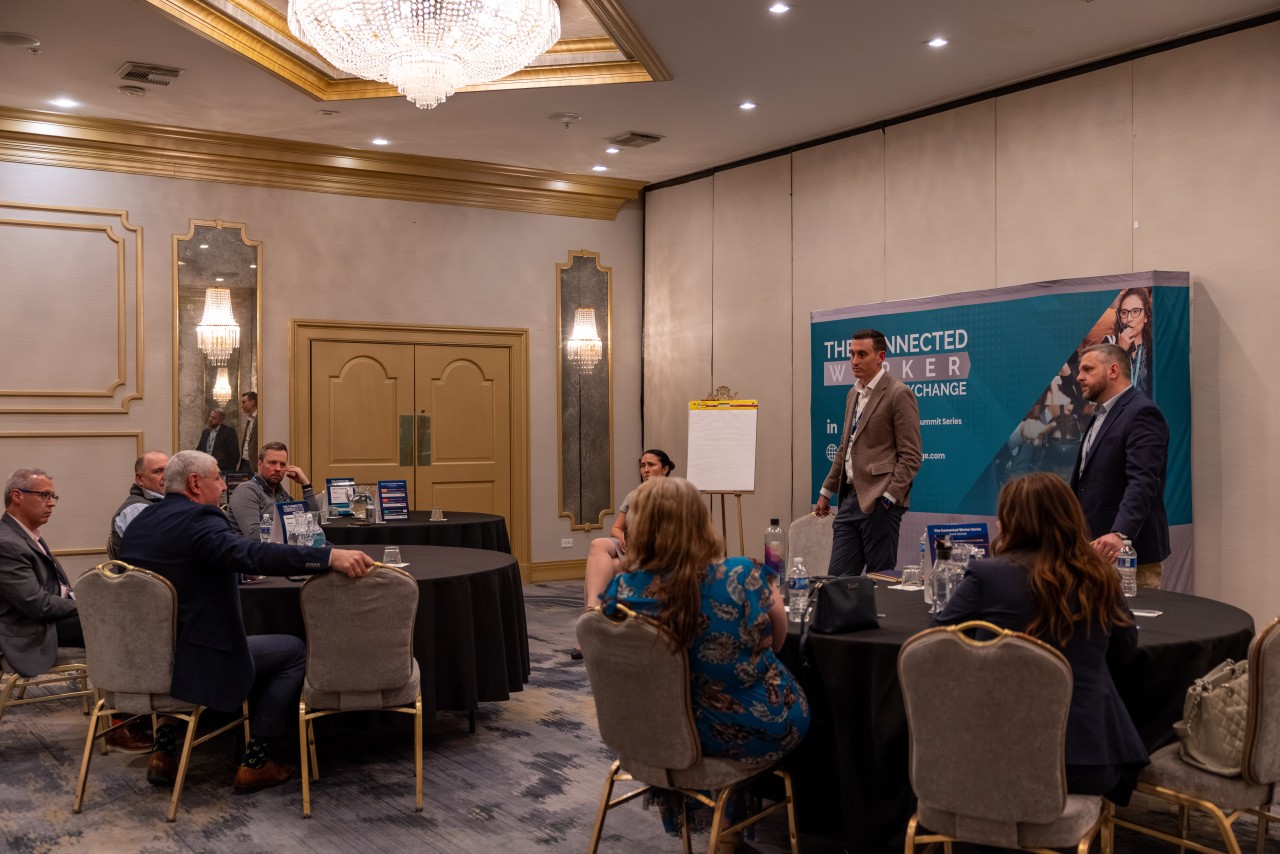
The discussion, opened by Candi Robison, Vice President of Enterprise Asset Management Strategy & Innovation at Ultimo, centered on a simple question: what is the core of your AI strategy? AI is no longer the new and shiny thing, it is now table stakes – everyone is using it in some capacity and without a strategy in place, it can quickly become noise and a distraction rather than a helpful tool to get the job done.
That framing set the tone for the session. This was not a presentation about AI potential. It was a working discussion about what is happening inside asset-intensive organizations today: where AI is gaining traction, where it is stalling, and what leaders need to address before it can create measurable operational impact.
Different industries. Different maturity levels. Similar challenges.
From AI Ambition to Operational Reality
One of the first shifts in the conversation was moving away from AI ambition and toward execution.
There is no shortage of interest in AI. Many organizations are exploring, piloting, or being asked to accelerate AI initiatives. What is less clear is where those efforts create real value.
Across the room, participants described a familiar pattern: AI initiatives often begin with energy and executive attention, but struggle when they are not tied to a specific operational problem. For leaders accountable for uptime, safety, cost, and performance, that gap matters. AI only earns its place when it improves how work gets done.
The group aligned on a more disciplined approach. Start with what is broken, inefficient, inconsistent, or unclear. Then determine whether AI is the right tool to address it.
In several cases, the answer may not be AI at all. And that is the point. A practical AI strategy is not about applying AI everywhere. It is about applying it where it can support better decisions, reduce friction, or improve outcomes.
The Data Reality Check
If there was one moment of collective honesty in the session, it came when the discussion turned to data.
Most organizations are not lacking data. They are struggling to use it.
Participants described data spread across systems, inconsistent inputs, work orders that capture activity but not insight, and uncertainty about whether the data can be trusted. A completed work order may show that a task was done, but not why the issue happened, what condition the asset was in, or which action prevented repeat failure.
The conversation quickly shifted from “How do we use AI?” to “Are we ready to use it well?”
For many organizations, the foundational work is still underway. Cleaning, structuring, and validating data is not a side effort. It is a prerequisite for AI that can support reliable decisions.
AI depends on the quality of the data, workflows, and decisions it is built around. If those foundations are unclear or inconsistent, AI is more likely to expose the gaps than solve them.

Where Adoption Actually Breaks
As the discussion deepened, we looked at adoption, another fundamental issue.
Across industries, there was strong alignment on one point: if a solution does not make life easier for the technician, it will not scale. Adoption at the point of execution determines whether AI becomes a source of operational value or another underused system.
This is where many initiatives fall short. Tools designed primarily for management visibility can introduce extra steps for the people doing the work. When that happens, teams may comply at first, but long-term adoption weakens.
The discussion shifted toward a different design principle: value has to exist at the point of execution.
Chris Lang, Sr. Vice President Product & Strategy at FSI/Ultimo, reinforced a practical point that resonated across the room: AI is most useful when it is embedded within the workflow, helping people make better decisions or reduce effort in the moment work happens.
That is where AI in enterprise asset management becomes more than an isolated technology initiative. It becomes part of how work is planned, performed, documented, and improved.
The Gap Between Designed Work and Real Work
Another theme that gained momentum was the gap between how work is designed and how it is actually performed.
Several participants described systems that looked efficient on paper but failed to reflect the realities of the field. Processes may be well documented, but actual work often depends on local knowledge, time pressure, physical constraints, and practical judgment.
Candi pushed the group to think differently. The most effective organizations are the ones that invest time in understanding real workflows by observing work directly and designing with those realities in mind.
For AI initiatives, that distinction matters. If AI is built around the process as imagined, it will miss the friction that slows teams down. If it is built around the process as performed, it has a better chance of supporting the people closest to the work.
A Workforce in Transition
The conversation naturally turned to the workforce itself.
Organizations are facing the same transition: experienced workers are leaving, and newer workers are stepping into complex environments with less hands-on knowledge.
For senior leaders, this is not only a labor issue. It is an operational risk. Critical knowledge often sits with experienced technicians, planners, and supervisors. When that knowledge is not captured, teams lose consistency, speed, and confidence.
AI can help preserve practical expertise, guide workers through unfamiliar situations, and make good decisions more repeatable across teams. The goal is not to replace human judgment. It is to make that judgment easier to access when and where it is needed.
This is where AI has practical value for the frontline: helping workers understand what to look for, what has happened before, and what action may make sense next.
Why Change Management Still Decides the Outcome
Technology is not the hardest part.
Change is.
The discussion made clear that successful AI adoption depends on more than a working model or a new tool. It depends on connecting new capabilities to visible value, explaining why data matters, and showing each worker how the change helps them do their job better.
That requires leadership. It also requires patience.
Organizations need to build trust in the data, trust in the recommendations, and trust that AI is there to support people rather than add complexity to their day. Without that trust, even strong technology will struggle to gain traction.
Where This Leaves AI in EAM
The near-term value of AI in enterprise asset management is not in fully autonomous systems.
It is in making asset data more reliable, embedding intelligence into daily workflows, supporting faster decisions, and helping organizations build the operational foundations needed for Intelligent Asset Management.
For asset-intensive organizations, that is where real progress begins. Not with broad AI ambition, but with practical, outcome-led use cases that improve the way maintenance and operations teams work every day.
The organizations that will move faster are the ones that connect AI to the realities of execution: the quality of the data, the usability of the workflow, the confidence of the technician, and the business outcomes leadership needs to improve.