

Industry challenges
Logistics providers need to keep assets available, control cost, and keep people safe while the flow of goods continues. Three pressures show up across almost every logistics network.

Lack of asset insight
Logistics teams plan and prepare the flow of goods, but the assets behind that flow are often mobile or spread across depots, terminals, warehouses, and ports.
Tracking the condition and performance of a distributed fleet and estate is difficult. A small fault can become a stranded vehicle, blocked bay, or delayed shipment before anyone sees it coming.
Ultimo gives operations and maintenance teams a clear overview of planned and proactive maintenance across mobile and fixed assets. AI-embedded sug
Poor data quality and inefficiency
Supply chain disruption forces constant replanning. Replanning is only as strong as the asset data behind it.
When maintenance history, spare parts, and condition data sit in disconnected spreadsheets or separate systems, efficiency gains stall. Ultimo supports the move from reactive firefighting to proactive, data-driven maintenance, so quality asset data underpins planning and teams make informed decisions from one shared source.
Rising costs and external pressure
Geopolitical tension, labor shortages, energy costs, and asset costs continue to pressure logistics operators. Teams cannot control every external force, but they can control how well their assets perform against them.
Ultimo brings maintenance, spare part control, and safety work into one system, so cost can be managed at the asset level and worker safety processes are easier to evidence.
Intelligent Asset Management for logistics
Ultimo helps logistics companies monitor, maintain, and improve fleet, facility, and infrastructure assets from one cloud-based EAM solution.
Fleet maintenance management functionality supports efficient maintenance planning for vehicles, trailers, and mobile equipment alongside the fixed estate, including warehouse systems, conveyors, terminals, and facility assets.
Flexible and out of the box
Your teams can access Ultimo from desktop and mobile devices and start from logistics best-practice templates instead of a blank canvas.
Decades of operational experience are built into templated solutions, helping teams move faster while still tailoring the system to how their network works, whether the asset base includes a vehicle fleet, cold-storage site, warehouse operation, or port.

Effectively monitor performance
Ultimo’s Microsoft Power BI integration brings cross-departmental dashboards into one shared view. Operations, maintenance, and finance teams can work from the same asset data and make more informed decisions faster.
Reporting helps logistics teams understand asset performance without chasing information across disconnected systems.

The fastest path to operational value
Ultimo customers can move from decision to procure Ultimo, to go-live in as little as three months. The Configuration Tool lets your own people tailor workflows, fields, and dashboards to how the network runs, without in-house developers or a large consulting program.
That means enterprise operational breadth without enterprise implementation timelines.
Outcomes logistics teams reach with Ultimo
See how logistics operators put Ultimo to work across the network. Results vary by customer, scope and maturity:
One system across a whole operation: Bristol Port Company runs vessel logistics, fleet, facilities, and safety on a single Ultimo instance, replacing an outdated maintenance system and more than 50 databases and spreadsheets.
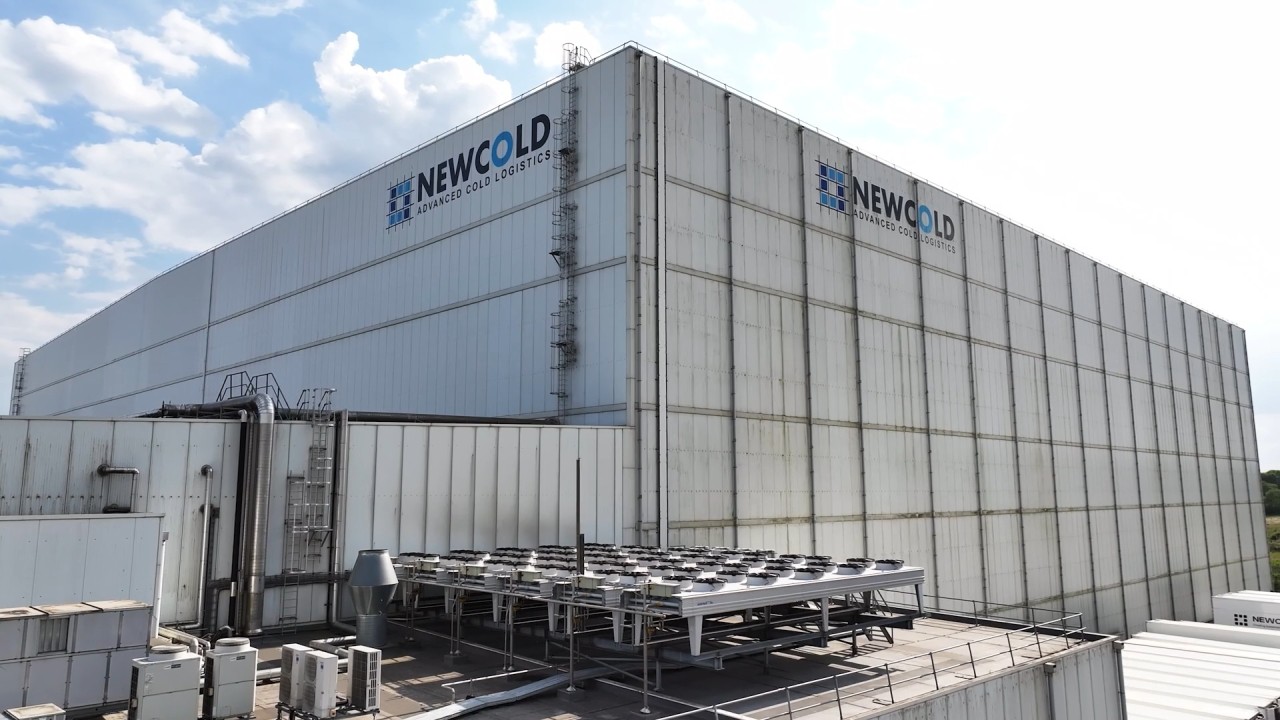
Reliability where downtime cascades: NewCold centralizes maintenance across automated cold-storage facilities, where one failure can ripple into the cold chain.
Assets that support critical movement: London Gatwick uses Ultimo for baggage handling and operational infrastructure that supports one of Europe’s busiest airports.

AI embedded in the work, not bolted on
Most AI tools understand language. But maintenance teams need AI that understands operational context too: asset hierarchies, maintenance workflows, safety protocols, work history, and compliance requirements.
Ultimo embeds AI directly into the maintenance workflow, helping planners and technicians complete everyday tasks faster, more consistently, and with clearer context. AI can support work preparation, suggest failure causes from maintenance history, and draft instructions for review. The governance model is clear: AI suggests, people review and confirm.
Digital workers in the Ultimo AI platform extend that support for more advanced maintenance planning. Ultimo’s Maintenance Planner digital worker consolidates maintenance data and shift information into a proactive morning briefing, researches asset history, and drafts instructions before the shift starts.
At Berkvens Doorsystems, the Maintenance Planner saved each team lead 30 to 60 minutes a day and matched manual analysis at more than 95% accuracy.
For logistics operations managing distributed assets, multiple sites, and workforce constraints, this kind of controlled AI support helps teams scale expertise while keeping people responsible for operational decisions.
Customer stories:
Ultimo in action


Bristol Port Company
Bristol Port started the implementation of the IFS Ultimo Enterprise Management (EAM) solution in 2021 to replace its existing maintenance management system, as well as over 50 databases and spreadsheets.
NewCold
Discover how NewCold, a global logistics leader, improved uptime, empowered maintenance teams and saved £95K by implementing Ultimo’s Enterprise Asset Management (EAM) software.
Discover all capabilities

Frequently Asked Questions
-
The strongest reliability outcomes do not come from platform name alone. They come from how well the EAM supports disciplined execution across the asset lifecycle.
In practice, the biggest improvements in asset reliability tend to come from EAM platforms that support:
clean, trusted asset data
mature preventive and proactive maintenance
reliable mobile execution in the field
strong integration with ERP, IoT, and related systems
embedded intelligence grounded in operational and EAM data
Reliability gains are usually strongest where adoption is broad, workflows reflect operational reality, and maintenance teams can act on insight consistently at scale. -
In supply chain, EAM refers to enterprise asset management for the physical assets that keep goods moving.
That includes vehicles, trailers, forklifts, conveyors, sorting systems, warehouse equipment, and cold storage infrastructure. EAM helps organizations manage preventive and proactive maintenance, inspections, safety compliance, and uptime across that asset base.
It complements systems such as transportation and warehouse management by helping protect the physical performance that throughput depends on. -
Transportation and logistics management is the coordination of how goods move from origin to destination across carriers, modes, and facilities.
It typically includes route planning, carrier management, warehouse operations, inventory control, compliance, and customer service. Strong programs balance cost, speed, safety, and reliability, supported by systems such as TMS, WMS, and EAM.
For leadership teams, the goal is not simply movement. It is resilient, cost-effective flow across the network. -
EAM services typically include implementation, legacy data migration, integration with ERP and connected systems, process design, reporting setup, mobile rollout, user training, and ongoing support.
In larger programs, services may also include asset criticality analysis, reliability strategy design, and continuous improvement reviews. The aim is not only to deploy software, but to help the organization improve maintenance maturity, execution consistency, and long-term asset performance. -
In transportation and logistics, EAM covers the physical assets that support movement, storage, and continuity of service.
That can include vehicles, trailers, forklifts, conveyors, sorting and scanning equipment, warehouse racking, refrigeration, and loading infrastructure. EAM supports preventive and proactive maintenance, inspections, safety checks, compliance documentation, and spare parts control.
It also helps track downtime, asset cost, and reliability, giving operators better control over uptime, safety, and operating efficiency. -
Fleet management software is typically focused on the vehicle layer, including telematics, driver behavior, fuel, routing, and basic vehicle maintenance.
EAM covers a broader set of physical assets across the operation, including warehouse equipment, facility systems, refrigeration, and other infrastructure that logistics performance depends on. Many organizations use both, combining vehicle insight with deeper maintenance and asset management workflows across the wider operation.
Let’s connect
See how Ultimo helps logistics teams protect uptime, control cost, and support safety across fleet, facility, and infrastructure assets.